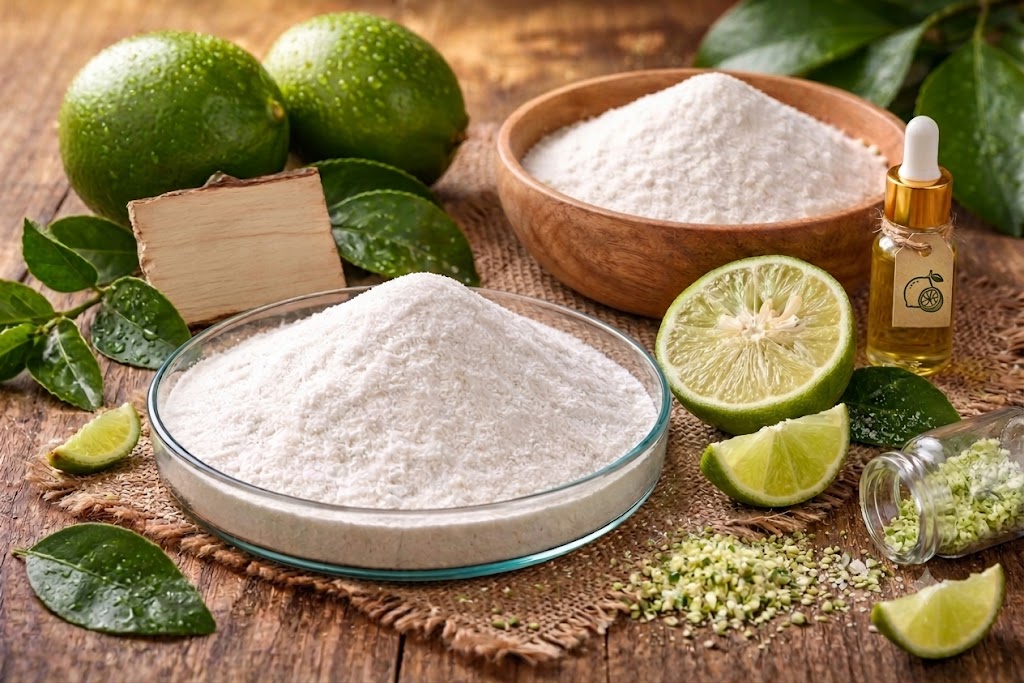
Lime (Citrus aurantiifolia), commonly known as jeruk nipis, is a tropical citrus fruit belonging to the Rutaceae family. It is widely cultivated in tropical and subtropical regions, including Indonesia, due to its refreshing sour taste and aromatic fragrance. The fruit is small, round to oval in shape, with a thin green peel that turns yellow when fully ripe.
Lime is an excellent source of vitamin C, citric acid, flavonoids, phenolic compounds, and essential oils, which contribute to its nutritional and functional properties. Because of its distinctive flavor, pleasant aroma, and antioxidant content, lime is widely used as a natural ingredient in food, beverages, and functional products.

Sumber: The Spurce Eat
Benefits of Lime in Food and Beverages
- Acts as a natural flavoring agent with a refreshing citrus taste and aroma.
- Enhances the flavor of juices, soft drinks, herbal teas, smoothies, and flavored water.
- Rich in vitamin C and antioxidants, increasing the nutritional value of food and beverages.
- Serves as a natural preservative by helping to inhibit microbial growth and delay oxidation.
- Improves the freshness and sensory quality of food products.
- Contains citric acid, which helps balance acidity and enhance flavor.
- Suitable for use in functional beverages and health drinks.
- Commonly used in marinades, sauces, salad dressings, desserts, and confectionery products.
- Provides a natural alternative to artificial flavorings in food formulations.
- Contributes to the development of clean-label and health-oriented food and beverage products.