
Cogon grass (Imperata cylindrica), commonly known as alang-alang, is a perennial plant widely distributed throughout tropical and subtropical regions, including Southeast Asia. Although it is often regarded as a wild grass, alang-alang has long been recognized in traditional medicine for its therapeutic properties. The rhizome of the plant is the most commonly utilized part because it contains various bioactive compounds that contribute to human health. Owing to its medicinal value, alang-alang has been used in traditional medicine, pharmaceutical products, food and beverages, and dietary supplements.
Alang-alang belongs to the Poaceae family and is characterized by its long, narrow leaves, extensive root system, and white, fluffy flower spikes. Traditionally, the rhizomes have been prepared as herbal decoctions and extracts to help reduce fever, maintain urinary tract health, and promote overall well-being. In many Asian countries, alang-alang has also been used to support kidney function and relieve minor inflammatory conditions.
 Image Courtesy : biem.co
Furthermore, alang-alang contains numerous bioactive compounds, including flavonoids, saponins, tannins, polyphenols, potassium, and essential oils, which contribute to its medicinal properties. These compounds exhibit antioxidant, anti-inflammatory, antimicrobial, diuretic, and antipyretic activities that help protect the body from oxidative stress and support the excretory system. Due to its diverse chemical composition and biological activities, alang-alang continues to be cultivated and utilized as an important ingredient in herbal medicines and health-related products.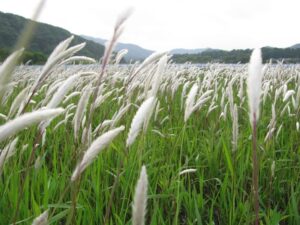
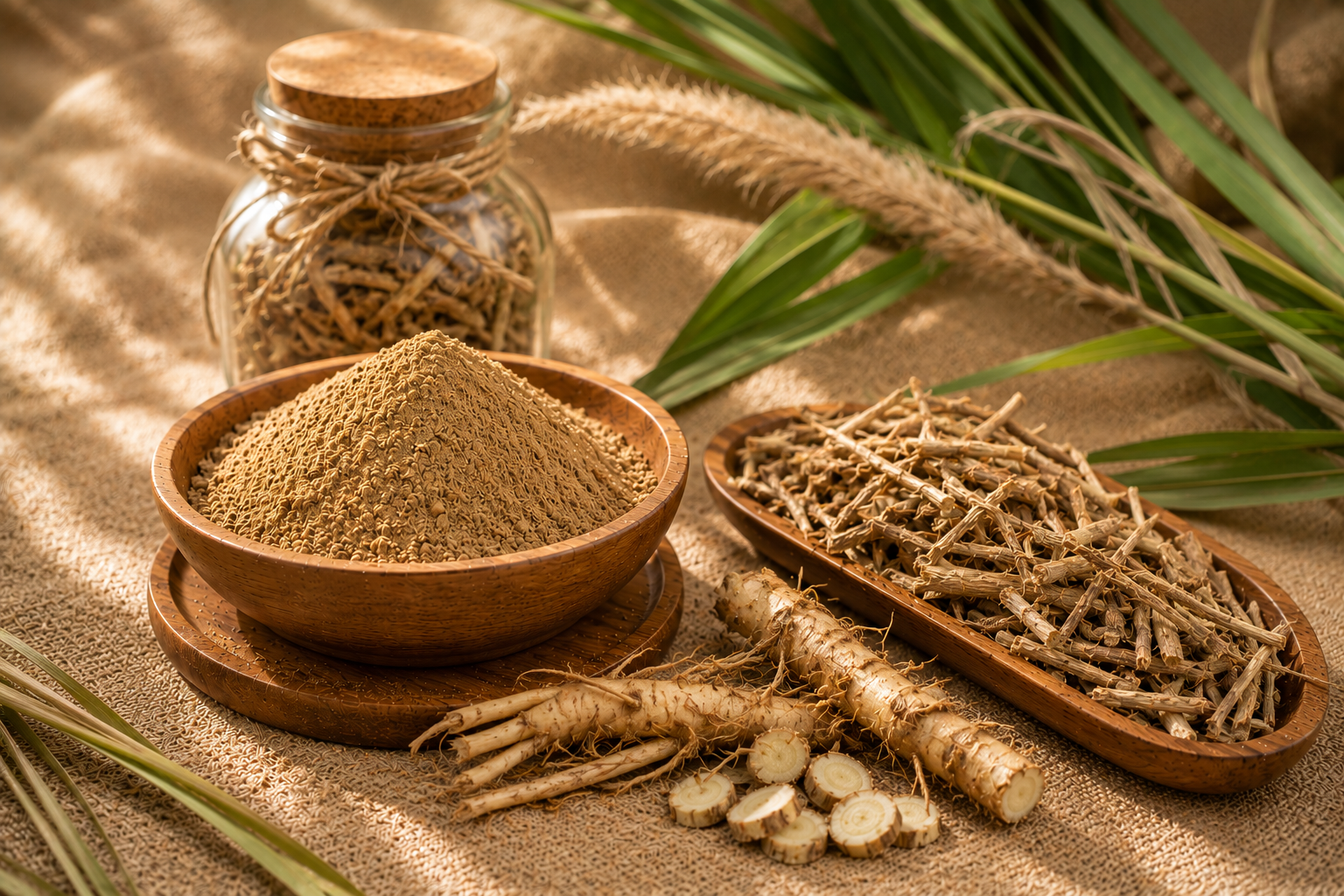
Image Courtesy : jamupedia.com
The benefits of cocon grass include:
Traditional Medicine
- Herbal remedies and traditional medicines (jamu): Alang-alang has long been used to help reduce fever, maintain kidney function, and support urinary tract health.
- Natural diuretic agent: Its bioactive compounds help increase urine production and facilitate the elimination of excess fluids from the body.
- Traditional herbal preparations: The rhizome is commonly processed into herbal decoctions and medicinal extracts.
Pharmacy
- Herbal capsules and syrups: Alang-alang extract is incorporated into pharmaceutical products because of its diuretic, antioxidant, and anti-inflammatory properties.
- Source of bioactive compounds: Active compounds such as flavonoids and polyphenols are studied for pharmaceutical applications.
- Therapeutic formulations: The plant is used in products intended to support kidney and urinary tract health.
Supplement
- Capsules and powdered supplements: Alang-alang is processed into dietary supplements to support kidney function and overall health.
- Detoxification products: Its natural diuretic properties may help support the body’s excretory functions.
- Wellness supplements: Alang-alang is commonly incorporated into products intended to maintain vitality and general well-being.