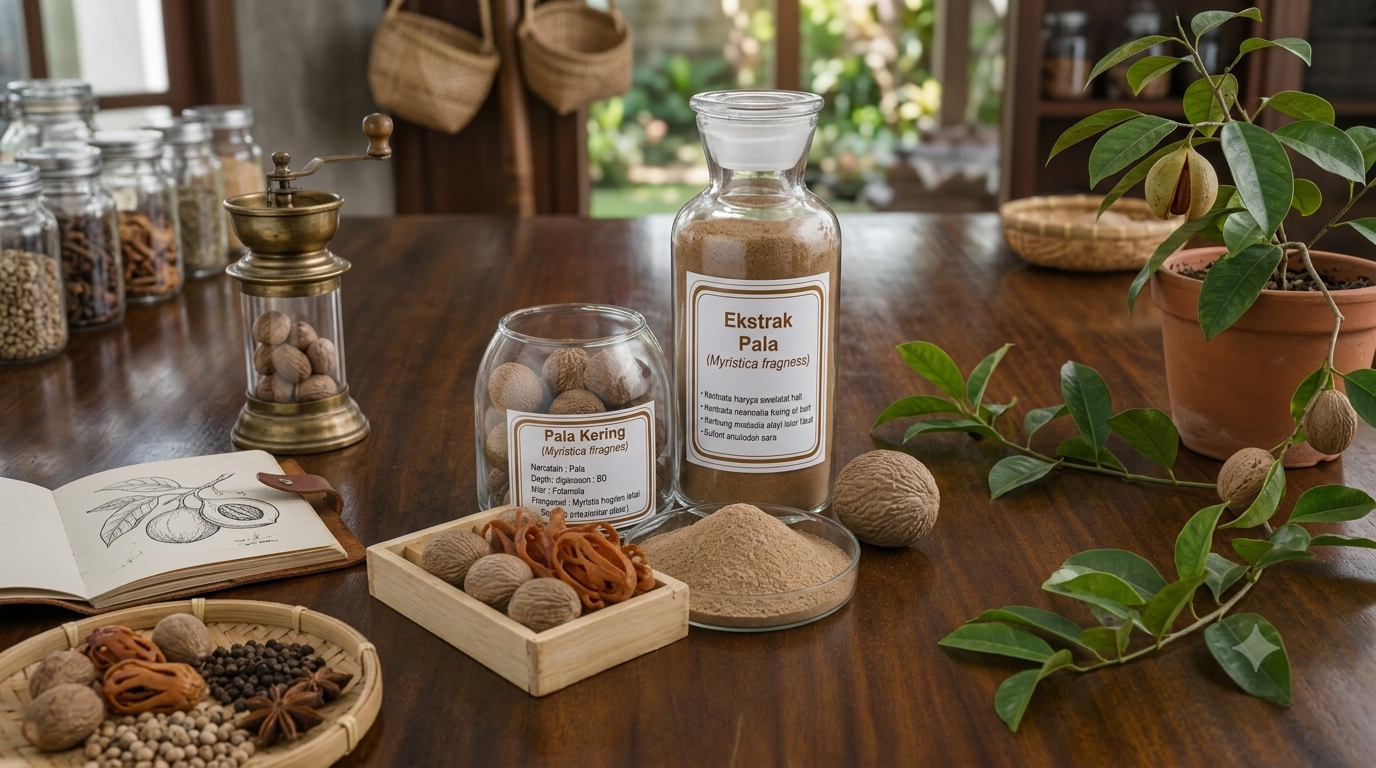
Nutmeg (Myristica fragrans Houtt.) is an evergreen tropical tree belonging to the Myristicaceae family. Native to the Maluku Islands (Spice Islands) of Indonesia, it is now cultivated in many tropical regions around the world. The tree produces two commercially valuable spices: nutmeg, obtained from the seed, and mace, derived from the red aril surrounding the seed. Nutmeg seeds are rich in bioactive compounds, including essential oils (myristicin, sabinene, α-pinene, β-pinene, and eugenol), lignans, flavonoids, phenolic compounds, and terpenoids. These constituents contribute to its antioxidant, anti-inflammatory, antimicrobial, and pharmacological properties, making nutmeg a valuable ingredient in pharmaceutical research and herbal formulations.
Sumber: Alodokter
Applications and Benefits in the Pharmaceutical Industry
- Used as an ingredient in digestive health formulations to help relieve indigestion, bloating, and flatulence.
- Incorporated into anti-inflammatory products to support the management of inflammatory conditions.
- Utilized in antioxidant formulations to help protect cells from oxidative stress.
- Studied for its antimicrobial and antifungal properties against various pathogenic microorganisms.
- Investigated for its potential analgesic (pain-relieving) effects in herbal pharmaceutical products.
- Used in respiratory formulations, including herbal cough and cold preparations.
- Explored for its neuroprotective and cognitive-supporting properties due to its bioactive phytochemicals.
- Investigated for potential hepatoprotective and gastroprotective effects.
- Used as a natural flavoring and aroma-enhancing agent in pharmaceutical syrups, lozenges, and oral liquid formulations to improve taste and patient acceptability.
- Continues to be studied as a source of natural bioactive compounds for the development of novel pharmaceutical and nutraceutical products.