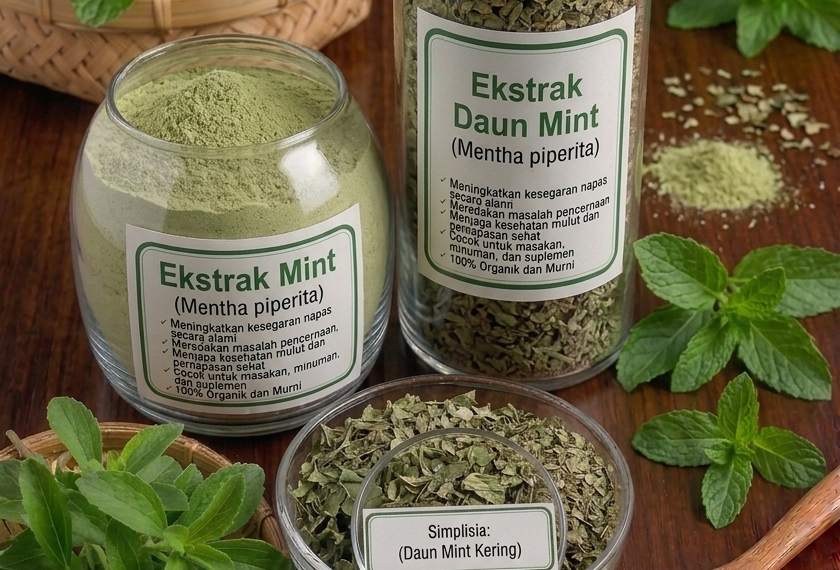
Mint (Mentha spp.) is a perennial aromatic herb belonging to the Lamiaceae family. It is widely cultivated around the world for its fragrant green leaves, which are rich in essential oils such as menthol and menthone, as well as flavonoids, rosmarinic acid, and other phenolic compounds. These bioactive constituents provide mint with its characteristic cooling sensation and antioxidant, antimicrobial, and anti-inflammatory properties, making it a valuable ingredient in the food, nutraceutical, cosmetic, and pharmaceutical industries.
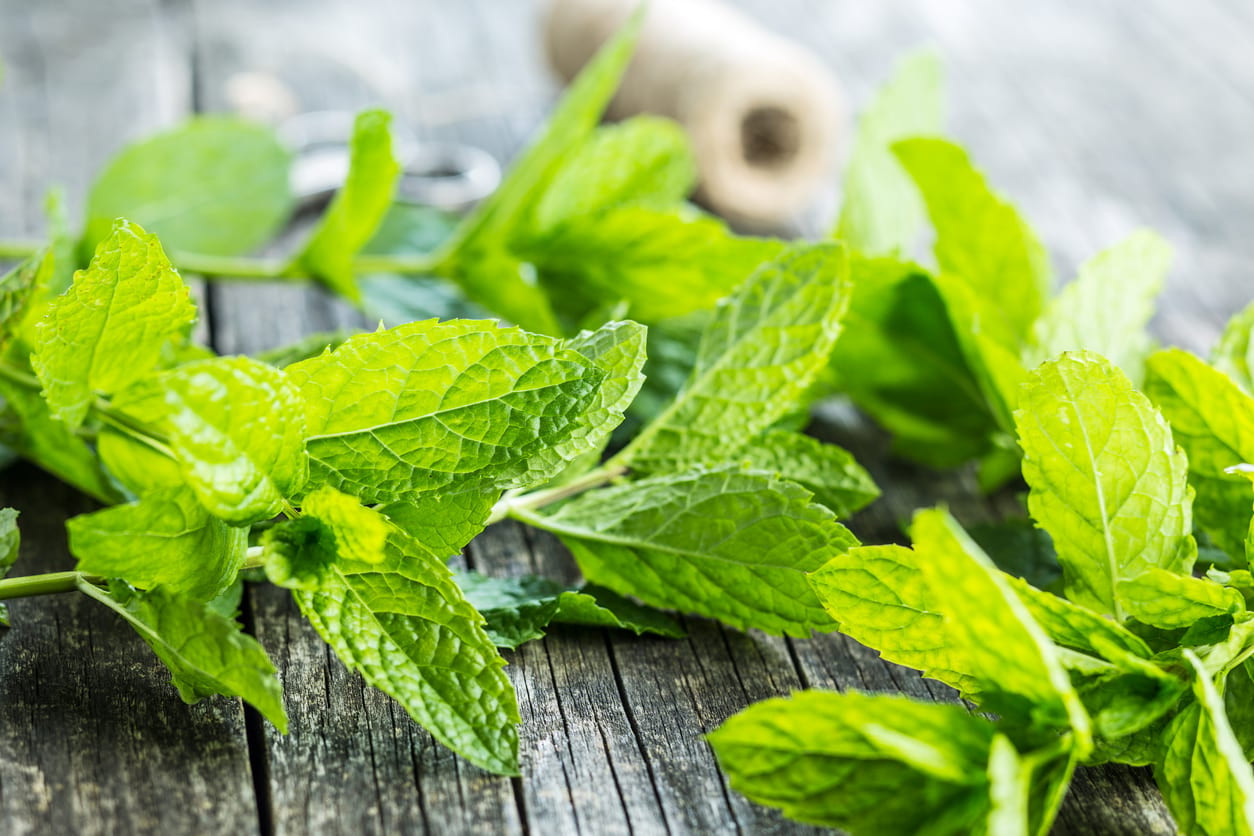 Sumber : honestdocs.id
Applications and Benefits
Traditional Medicine
- Traditionally used to relieve indigestion, bloating, and stomach discomfort.
- Helps reduce nausea and motion sickness.
- Supports respiratory health by relieving cough and nasal congestion.
- Provides a cooling effect that helps soothe headaches.
- Rich in antioxidants that support overall wellness.
Food & Beverage
- Widely used as a natural flavoring in teas, beverages, and functional drinks.
- Added to candies, chewing gum, chocolates, and confectionery.
- Used in desserts, salads, sauces, and culinary dishes.
- Processed into mint extracts, syrups, and essential oils.
- Provides a refreshing aroma and cooling taste.
Dietary Supplements
- Available as capsules, tablets, powders, essential oils, and herbal extracts.
- Supports digestive health and gastrointestinal comfort.
- Helps promote fresh breath and oral hygiene.
- Provides antioxidant support for overall health.
- Common ingredient in herbal wellness and digestive supplements.
Cosmetics
- Used in facial cleansers, toners, and skincare products for its cooling and soothing effects.
- Helps refresh and revitalize the skin.
- Included in shampoos, conditioners, and scalp care products.
- Widely used in toothpaste, mouthwash, and oral care products.
- Added to soaps, lotions, body washes, and aromatherapy formulations.
Pharmaceutical Industry
- Utilized as an active ingredient in cough syrups, throat lozenges, and inhalation products.
- Used in digestive medicines to help relieve gastrointestinal discomfort.
- Studied for its antimicrobial, anti-inflammatory, antioxidant, and antispasmodic properties.
- Incorporated into topical pain-relief creams and cooling gels.
- Applied in pharmaceutical and nutraceutical formulations as a natural source of menthol and essential oils.
s a perennial aromatic herb belonging to the Lamiaceae family. It is widely cultivated around the world for its fragrant green leaves, which are rich in essential oils such as menthol and menthone, as well as flavonoids, rosmarinic acid, and other phenolic compounds. These bioactive constituents provide mint with its characteristic cooling sensation and antioxidant, antimicrobial, and anti-inflammatory properties, making it a valuable ingredient in the food, nutraceutical, cosmetic, and pharmaceutical industries.
Applications and Benefits
Food & Beverage
- Widely used as a natural flavoring in teas, beverages, and functional drinks.
- Added to candies, chewing gum, chocolates, and confectionery.
- Used in desserts, salads, sauces, and culinary dishes.
- Processed into mint extracts, syrups, and essential oils.
- Provides a refreshing aroma and cooling taste.