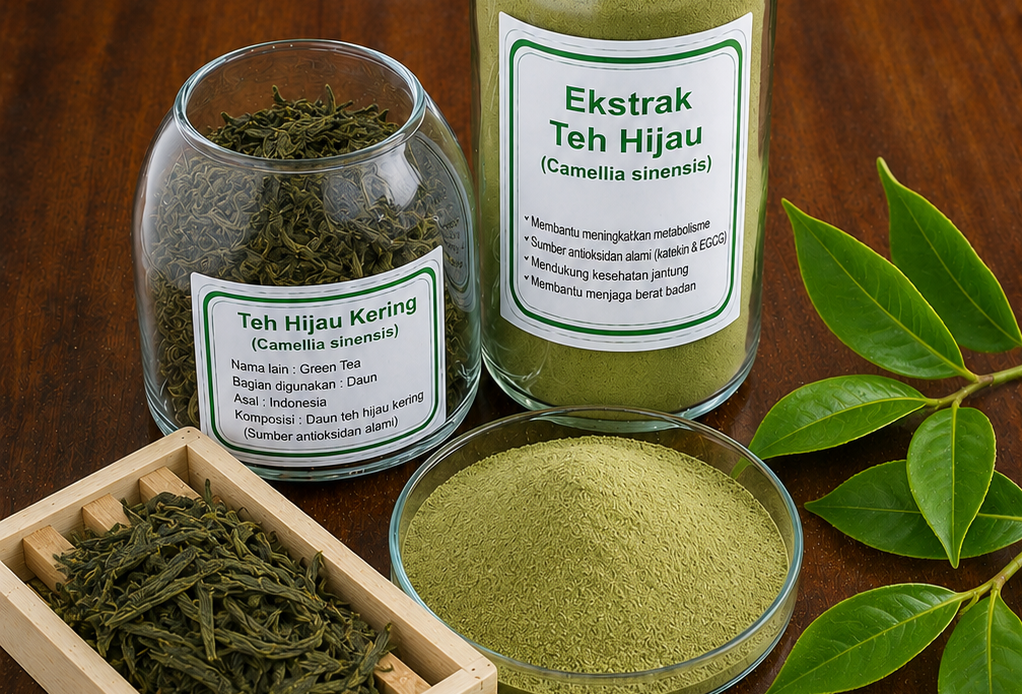
Tea leaves (Camellia sinensis) are shrubs or small trees that come from East Asia and are widely cultivated in mountainous areas with cool climates. This plant can grow up to 2–10 meters tall if not pruned, but in plantations, it is usually kept around 1–1.5 meters to make harvesting easier. The leaves are oval to lance-shaped, shiny green, have finely serrated edges, and are alternately arranged on the stem. Tea flowers are yellowish-white with yellow stamens, while the fruit is a small round shape that contains seeds.
Tea leaves contain various bioactive compounds such as polyphenols (mainly catechins), flavonoids, tannins, caffeine, theanine, as well as vitamins and minerals that play an important role in providing health benefits.
 Sumber : paranet123.blogspot.com
Applications and Benefits
Food & Beverage
- Primary ingredient for green, black, oolong, white, and herbal tea blends.
- Used in functional beverages and ready-to-drink tea products.
- Added as a natural flavoring in desserts, confectionery, and baked goods.
- Used in tea extracts for nutraceutical and beverage formulations.
Pharmaceutical Industry
- Utilized as a source of standardized polyphenol and catechin extracts.
- Incorporated into formulations with antioxidant and anti-inflammatory properties.
- Studied for cardiovascular, metabolic, and neuroprotective health applications.
- Used in pharmaceutical research for chronic disease prevention and supportive therapy.
- Applied in the development of botanical-based pharmaceutical ingredients and functional health products.