Roselle flowers are a type of flower that comes from the African continent, with the Latin name Hibiscus sabdariffa. The flowers and leaves of roselle are commonly processed into herbal tea that has a ton of health benefits. This type of flower is known for its deep red color and the sour taste of its petals. In addition, this herbal plant can also function as an antiseptic and an astringent agent. Roselle can grow well in tropical and subtropical regions. Roselle (Hibiscus sabdariffa L.) is a member of the Malvaceae family. This plant’s native habitat stretches from India to Malaysia.
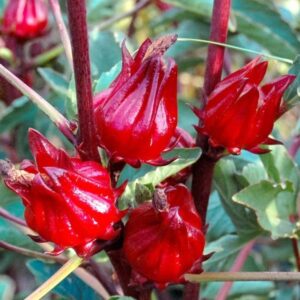 Image Courtesy : berita.99.co
Roselle (Hibiscus sabdariffa L.) is an annual herb that grows 0.5–3 meters tall. Its stem is round, upright, woody, and red. The leaves are single, egg-shaped with palmate veins, serrated edges, and measure 6–15 cm × 5–8 cm. Rosella flowers grow singly at the leaf axils, with red sepals numbering 8–11, which are the main part that is used. The flower’s corolla is funnel-shaped with five petals. The fruit is cone-shaped, red, and divided into five compartments. The seeds are kidney-shaped, small in size, white when young, and turn gray when mature.
Roselle is mainly cultivated for its calyces; it’s rich in organic acids, minerals, amino acids, carotene, and vitamin C. The vitamin C content in roselle is three times higher than in black grapes, nine times higher than in oranges, ten times more than in starfruit, and 2.5 times compared to the vitamin C in guava.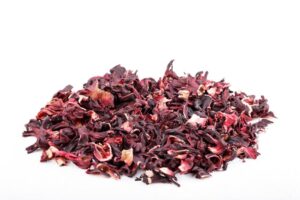
Image Courtesy : id.theasianparent.com
Benefits of Roselle Besides having a fresh taste, Roselle flower petals have quite a complete pharmacological effect, such as diuretic, anthelmintic, antibacterial, antiseptic, anti-inflammatory, reduces fever, prevents heart problems, blood cancer, and stimulates intestinal peristaltic movement.